Encounters · Paris
It Was Nice to Meet the Tennis Player.But Even Nicer to Meet the Person.
An unexpected conversation in Paris that began with tennis and became a reminder that underneath titles, accomplishments, and public identities, people are still just people.
By Chilen Moya
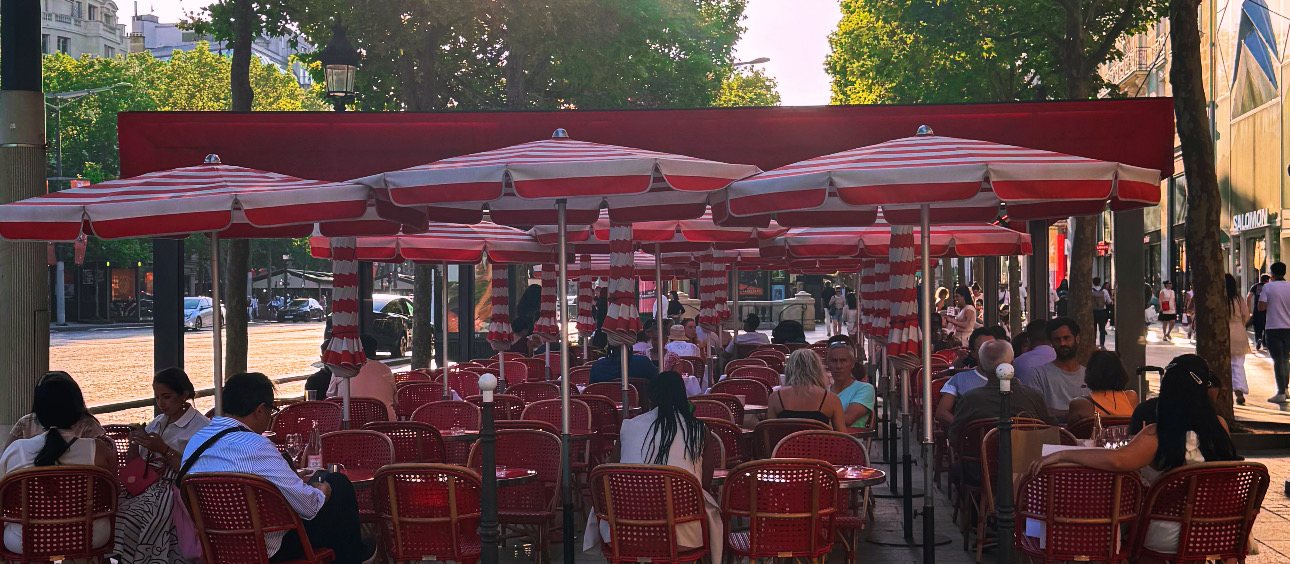
I arrived at the Peninsula Hotel in Paris hot, thirsty, and slightly overwhelmed.
The city was in the middle of a heat wave, and after walking through the streets that morning, all I wanted was a cold glass of Prosecco and a bottle of water. I had planned to sit outside in the courtyard, but the heat changed my mind. Instead, I settled into a seat near the bar.
A man walked in with someone from his team. I recognized him immediately.
I smiled. “Hi,” I said. “I’m a fan”.
He smiled back.
That should have been the end of the story. Instead, it became one of the most memorable conversations of my trip.
At first, we talked about tennis. That made perfect sense. Tennis was the reason I recognized him in the first place.
He seemed surprised by how much I knew about the sport. When I mentioned attending the Miami Open and casually referred to Sebastian Korda by his nickname, he laughed.
“She even knows Sebi’s nickname.”
Apparently, I had passed some unofficial tennis fan test. We talked about my idol Rafa Nadal, about favorite matches, and about the day I got stranded at the Miami Open after staying to watch one of Rafa’s matches. He laughed because he understood exactly why someone would stay that long just to watch a favorite player.
But somewhere along the way, the conversation stopped being about tennis.
Without either of us noticing, tennis simply became the language that introduced us.
The real conversation began afterward. He asked where I was from.
When I told him I was Dominican and lived in Miami, he said he thought he had heard an accent. Then he asked me something I wasn’t expecting.
“Do you consider yourself Black or brown?”
“Black,” I answered. “Isn’t that obvious?” He laughed. So did I.
What followed wasn’t really a conversation about race. It was a conversation about identity.
I told him that Miami had always felt different to me. People from every background seem to occupy the same spaces. Years earlier, living in East Boston, I had experienced something else entirely. That’s when he quietly asked whether I thought people there were a little racist.
I remember thinking how unusual it was to be discussing race with someone I had met only an hour earlier. Conversations like that don’t usually happen so quickly in my life. Somehow, ours had skipped straight to honesty.
The conversation kept evolving. Soon we were talking about relationships, modern dating, commitment, loyalty.
He asked whether I was traveling alone. He asked whether I was single.
I had already mentioned his girlfriend and told him she seemed beautiful and intelligent. I even joked that I was old enough to be his mother.
Nothing about the conversation felt flirtatious. It felt comfortable.
Like two people who genuinely enjoyed exchanging ideas.
Looking back, I realize that every topic revealed something different.
Tennis introduced us. Talking about identity requires trust. Talking about relationships reveals openness. Each conversation peeled away another layer until I stopped thinking of him as someone I had seen on television. He simply became the person sitting across from me.
Then came my favorite moment. He looked around at the Peninsula Hotel, at my glass of Prosecco, at my stories about traveling alone through Europe, smiled, and decided that I was bougie. I laughed so hard!
Honestly, from his perspective, the evidence wasn’t exactly helping my case.
There I was, a Dominican woman from Miami, drinking Prosecco in Paris while discussing tennis and solo travel as though it were an ordinary Tuesday afternoon.
What stayed with me wasn’t the joke itself. It was what the joke represented.
People don’t tease each other like that when they’re carefully managing impressions.
They tease each other when they’ve become comfortable enough to stop performing.
Somewhere between talking about forehands, identity, race, loyalty, and travel, we had stopped being a fan and a professional athlete. We had become two people enjoying a conversation.
That realization stayed with me long after I left Paris. I never asked for a photograph. I never posted about the conversation online. I never felt the need to prove it happened. The conversation itself was enough.
Looking back, it was nice to meet the tennis player, but it was even nicer to meet the person.
If he had never played professional tennis, I still believe I would remember that afternoon.
Not because of who he was, but because of how quickly two strangers forgot the labels that had introduced them.
Years from now, I’ll probably forget tournament draws, rankings, and scores.
I doubt I’ll forget that afternoon. Because what made it unforgettable wasn’t celebrity.
It was the reminder that underneath titles, accomplishments, and public identities, people are still just people.
Sometimes they laugh loudly, sometimes they tell you to let them finish their thought, sometimes they tease you for being bougie, and sometimes, if you’re lucky, you’ll discover that the most memorable part of meeting someone extraordinary is realizing just how wonderfully ordinary they can be.
Chilen Moya is the author of I Was an Unwanted Child, But I Always Loved Myself.
Order the Memoir →